
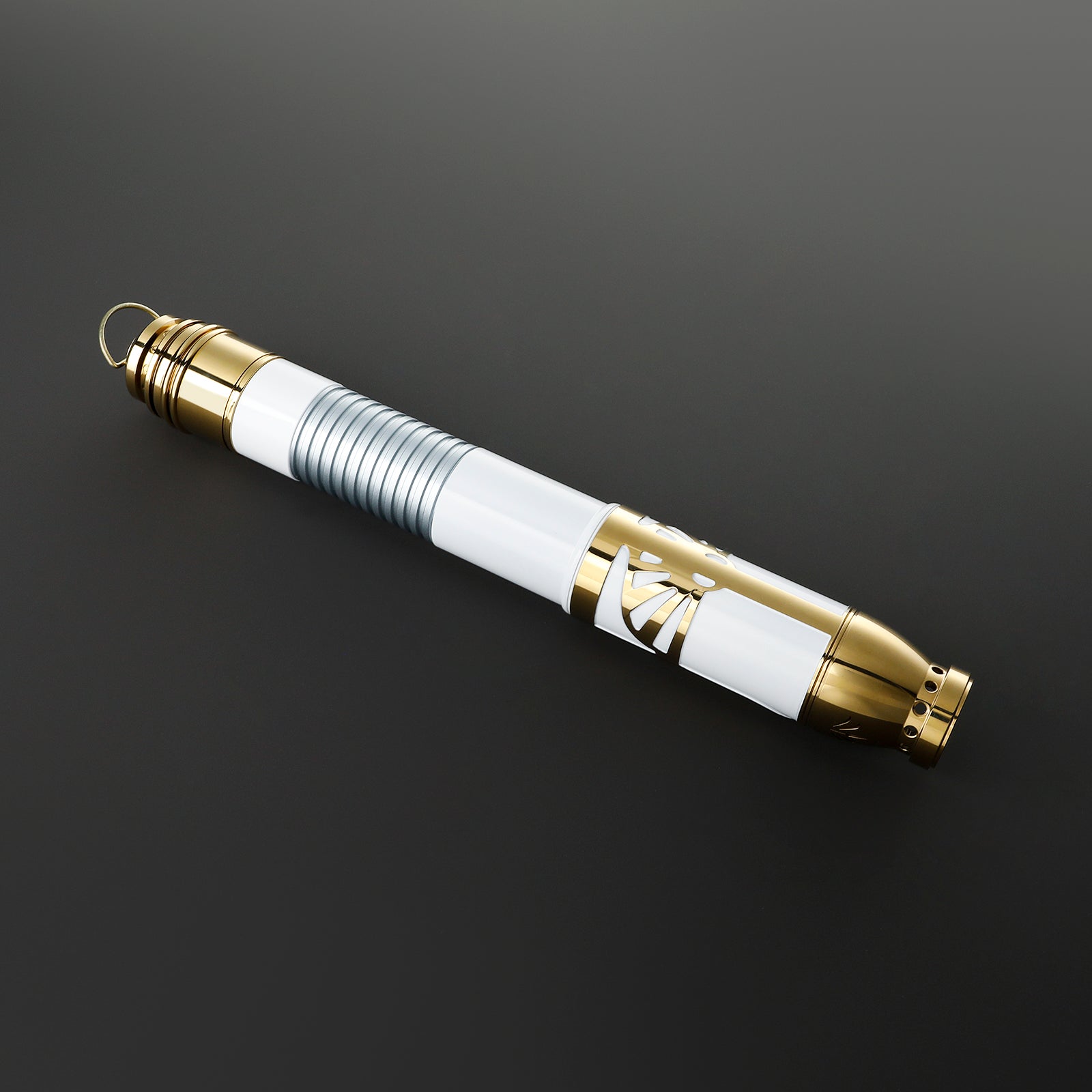
Who Was Santari Khri?
A Jedi Master under the High Republic Era, Santari Khri served the Jedi Order. This was nearly 350 years before the rise of the Galactic Empire and the Clone Wars. Her narrative is essentially tied to the rise of a new era of galactic investigation. It is also connected with one of the Jedi's most important but terrible creations: Starlight Beacon. Unlike many other Jedi of her day, Master Khri's knowledge went beyond just diplomacy or combat. Her speciality was a distinctive combination of Force-based design, engineering, architecture, and construction. She was a visionary individual asked to help the Jedi's light in the galaxy find shape in the physical symbols; she was a builder. She had the mentality of an artist and a pragmatist. She saw the Force as a basic element of infrastructure and stability, not only a means of peacekeeping. This viewpoint made her essential to the Great Works project of the Republic. But it also weighed her with a great level of personal responsibility for any architectural failure.
Architect of Starlight Beacon
Her work as Starlight Beacon's chief architect and head project coordinator marked Santari Khri's most grand and distinguishing accomplishment. The culminating pinnacle of the Republic's Grand Works was this enormous deep space station. Additionally, the Jedi Order's new frontier outpost in the Galactic Frontier, namely inside the peaceful region known as the Hetzal system, was it. Originally meant to represent hope, this was conceived as a symbol. Republic law, Jedi support, and a lighthouse of safety in the far reaches of the Outer Rim, it was. The station was intended to be totally independent. It had docking rings, medical bays, diplomatic rooms, gardens, and a core Jedi Temple spire. Daily close cooperation between Master Khri and celebrated hyperspace prospector Mari San Tekka existed. San Tekka's natural, unparalleled navigation skills were essential. They were vital in creating the steady and effective hyperspace lanes needed to link Starlight to the Core. Khri's brilliance was in merging San Tekka's intricate star maps and gravity well data. She merged them into the actual navigation and structural stress buffers of the station. This guaranteed it could operate as a dependable center despite its unstable site.
The Kyber Heart of the Station
Starlight Beacon's innovative power source and symbolic center were a major, and finally catastrophic, design feature. At the center of the station, Santari Khri personally supervised the alignment and calibration of a huge, specially oriented kyber crystal. This crystal was quite sensitive to the Force. It was designed to strengthen the systems of the station. It was supposed to drive its long range communications network. It was intended to be a symbolic lighthouse for the Jedi's bright presence. The kyber core was a wonder of Jedi craftsmanship. It aimed at matching the Force sensitivity of the local Jedi. This fostered a symbiotic connection between the people and their residence. This bold design choice nevertheless exposed a terrible vulnerability. The Nihil marauders discovered this vulnerability during the Hyperspace Disaster and the following Nihil crisis. Through invasion and espionage, they acquired knowledge. Marchion Ro was guiding them, the terrible Eye. They turned the Emergences into weapons. Their banned Paths allowed them to hurl the Gaze Electric, a commandeered starship, at relativistic speeds toward Starlight Beacon. The kyber core was directly damaged and destabilized by the effect. This started a chain of events. The reaction destroyed the center spire of the station and finally levelled it. This came in a terrible explosion, damaging the Hetzal system.
Partnership with Jedi Master Rel
Santari Khri's creations are boundless from her close collaboration with Jedi Master Rel. Deep meditation and a strategic mind distinguished this Cerean Jedi. One of the foundation blocks of her life was their connection. It combined strong interpersonal interaction with a common professional goal. Combined, they were the project's Starlight Beacon's two main drivers. Rel usually worked as a project manager and liaison with the Jedi Council; Khri was the designer. Their personal diaries show strong evidence that their relationship was romantic. This was an obvious departure from the usual limitations on attachment imposed by the Jedi Code. This bond stayed under close guard secrets. Only a select few, like Master Avar Kriss, knew it. Their collaboration was a union of ideas and hearts. It was totally devoted to bringing their vision of a galactic beacon of peace to life. Later on, the strength of their link would provide the basis for their amazing, collective stamina throughout exile.
The Weight of Guilt and Responsibility
Starlight Beacon's collapse was not only a galactic catastrophe for Santari Khri. It represented a major personal shortcoming. She personalizes the disaster as the principal designer. She believed her design, her magnificent, kyber powered heart, had turned into a bomb. Thousands were killed by that bomb, including civilians, Republic personnel, and Jedi. Official reports could have mentioned Nihil treachery. For Khri, though, the fundamental weakness was her invention. The broader destruction of the Nihil Stormwall added to this shame. The perceived failure of the Jedi Order to guard the Frontier worsened it. Her hope symbol has been converted into one of the Jedi's weaknesses. This tremendous sense of obligation drove her future activities mostly. This was the conviction that her life's most significant accomplishment had brought untold damage. She could not keep working for an Order whose flagship project had collapsed so utterly. She believed her very presence reminded her of that failure.
The Mystery of Her Disappearance
Following the cataclysm, the historical account of Santari Khri and Master Rel is purposely broken. They did not die in the wreckage of the station. Nor did they come back to Coruscant to face formal investigation. Instead, they arranged a covert, deliberately planned, and self imposed exile. They masked under the post Starlight era's upheaval. All formal connections with the Jedi Order were cut by them. Their vanishing was so total that they developed legends. Historians started to wonder about their ultimate fate. Their aim was to atone rather than just to disappear from observation. They wanted to safeguard something very precious. They thought it related to the more general galactic gloom they had observed. Their exile became a holy, covert penance trip for them. They decided to disappear so completely that no one could locate them. Not even the Jedi Council could locate them or whatever they protected.
Guardian of the First Blade
Rel's exile and Santari Khri had a particular and very important goal. It was to be the secret, everlasting guardians of the Stormwall, an old artifact called the First Blade. The modern lightsaber evolved from this crude, deadly weapon. It was a tremendously strong and unsteady artifact. An antique, violent Force wielding order developed it. Its technology predates the official founding of the Jedi Order. The Blade was intimately tied to the legacy of the hated extragalactic hunters, the Nameless or the Drengir. It posed a serious threat if found. Marchion Ro, nihilistic leader of the Nihil, aggressively hunted the First Blade. He wished to disclose its mysteries. He thought it might give him total power or work as a tool to totally expose the Jedi. Knowing this danger, Rel grabbed the Blade. Khri also came into possession of it. They kept it on Seatos, a storm torn planet. Their strategy was more than just burying the matter. Its active defence was to be entrusted to a colony of the kind, dragon like Purrgil. Through natural hyperspace migration, these cosmic entities may move between planets. Their Seatos presence is related to a particular geomagnetic anomaly.
Life in Seclusion on Seatos
For ages, Santari Khri and Rel lived in total isolation on Seatos. They built a tiny, improvised settlement of stone and salvaged metal. Built into the cliffsides of a churning ocean. For study as well as a lookout, this residence was used. Triply watchful, their days were committed. They preserved the mystery of the First Blade's position. To guarantee the creatures would keep their everlasting watch, they researched and bonded with the Purrgil. From a salvaged communications array, they observed the galaxy from afar. Their lives were ones of great simplicity. The sea and the land kept them alive. Their only solace was their relationship to the Force and to each other. They left behind complex diaries. These were physically chiselled into old tree trunks and stone walls rather than written on data sheets. They recorded their life, their regrets, their love, and their emphatic warnings about the Blade. They became a local legend. In stories about planets, they were known only as the enigmatic Herald and the Guide. The few immigrants who withstood the storms recounted these legends.
The Hidden Path and the Imperial Threat
Nearly four centuries later, the legacy of Santari Khri underwent an unexpected direction. This was from the Imperial Era's Dark Times. Her hidden communication array on Seatos was found and turned. Passive galactic monitoring was the intended application for it. A Hidden Path cell made use of it once more. Leading this underground network were people like ex Jedi Master Zym and the tactical droid ZN-A4. It aided force sensitive fugitives in avoiding Imperial punishment. To coordinate rescues, they employed Khri's array as a safe relay. Still, this event produced a discernible signal footprint. The Inquisition followed this signal to Seatos. The horrific Imperial Senator Daho Sejan and the savage Ninth Sister led them. To destroy the Hidden Path cell and grab any Jedi involved, they started a full scale worldwide attack. The peaceful planet Khri, selected for its isolation, therefore became a sudden battlefield. The Empire and the Resistance turned it into a battleground.
Discovery by the Mantis Crew
Amid this Imperial assault, the concealed reality of Santari Khri's death was revealed. The Mantis' crew found it. Led by Jedi survivor Cal Kestis, they were among the crew were the Nightsister Merrin, the pilot Greez Dritus, and the courageous droid BD-1. Following clues, they were drawn to Seatos. These signals emanated from the Path of the Jedi, a long ago recording by Master Rel himself. Furthermore derived from a map piece discovered on the Koboh Shattered Moon. Cal set out to discover a means by which the covert planet Tanalorr could be found. The path, however, took him straight toward Khri's ancient enigma. They discovered the remains of Khri and Rel's cliffside camp on Seatos, among the old shipwrecks lying on the coast and the severe electric storms. Cal Kestis put together the whole, moving narrative by carefully decoding Khri's engraved journal entries and engaging with strong Force echoes. He assembled their narrative of exile, First Blade guardianship, and the deep love and guilt driving them.
The Gravity Sphere Puzzle and Khri's Engineering Mind
To get access to the deepest chamber containing the First Blade, Santari Khri created one last, brilliant test. It was a sophisticated mechanism involving the control of several gravity spheres within a destroyed temple. Her engineering genius was precisely mirrored in this puzzle. It also mirrored her understanding of the basic forces directing Starlight Beacon's location. It called for knowledge of momentum, orbital mechanics, and meticulous, accurate use of the Force. It wasn't about raw strength to solve this. It required mental capacity, tolerance, and concordance with the physical rules of the cosmos. Only someone with the mindset of a Jedi Consular, a builder, or a real knowledge seeker could unlock this lock. It efficiently filtered out rash assailants such as the Nihil or, ages later, the Sith driven Inquisitors.
Summoning the Purrgil Guardians
The last stage of unveiling the vault, though, was non mechanical. It was organic and remarkably in touch with the Living Force. It entailed developing a particular, resonant sonar signal. This call employed antique frequency stones. This call didn't open any doorway. It instead summoned the Purrgil guardians. The huge beings responded to a signal. Over generations, working with Khri and Rel, they had been trained to identify this signal. Then they would use their specific bio electrical and gravitational skills. These talents were used to move the temple's very tectonic plates. This revealed the secret chamber by moving enormous stone edifices. Khri's masterstroke was this concept. The last protector was neither a lock nor a weapon. It was a dynamic environment. It guaranteed that only a Jedi in harmony with nature might move ahead. Such a Jedi would know the legacy of the guardians. A dark side user would never accomplish anything. They would try to overpower or destroy the Purrgil.
Confrontation in the Vault
Cal Kestis discovered the First Blade after finally reaching the old, water logged vault. It was hanging in a stasis field. The item was visually different from a lightsaber. A harsh, asymmetrical hilt with a jagged, crackling blade of raw, unsteady energy characterized it. That energy gleamed with a menacing amber colour. The air vibrated with an unpleasant, combative frequency. More especially, Cal came to see the great weight of the sacrifice made via the Force echoes and Khri's warnings. He also saw the fundamental threat the Blade stood for. It was a weapon meant entirely for destruction. It was a key focus for the dark side. The peace and defence a Jedi lightsaber embodies were at odds with its very design. He decided not to assert it, a critical decision showing great insight.
The Decision to Leave the Blade Hidden
Cal Kestis deliberately chose to keep the First Blade covered. He closed it inside his room. He judged it too hazardous for anyone to carry. Included among these were Jedi, Resistance fighters, or Imperials. Taking it would disrespect the centuries of penitence by Master Rel and Santari Khri. It would endanger its ruinous influence. He honoured their unending watch. Some riddles, he knew, are meant to stay concealed. He realized that some weaponry is too volatile to be deployed even against an adversary like the Empire. Leaving validated their whole life's work. The Blade was still missing. This satisfied Khri's main goal of preventing it from galactic circulation. Beyond her death, she was a secret she successfully kept.
The Physical Fate of Khri and Rel
The evidence discovered on Seatos strongly suggests the physical fate of Santari Khri and Master Rel. The Force echoes talk of lasting love and a last, quiet release. Over the centuries, there have been no traces of violence, struggle, or coerced entry at their camp. Their last diary entries' narrative tone helps the most reasonable deduction. Most of their long, natural lives they probably spent on Seatos. Together there, still in exile, they died. Their bodies probably returned to the earth they promised to defend. Perhaps they were sent to the sea or buried close to their camping. Their last home is the world itself. The mountains, the storms, and the cherished Purrgil migrations absorbed their energy. They were not targets of violence. Time and their own great dedication victimized them. Their narrative did not end in a spectacular struggle. It concluded with the silent, collective fulfillment of an obligation spanning millennia. In their segregated atonement, their love for each other was the sole unchanging.
A Legacy of Guilt, Duty, and Secrecy
Dualistic and very complicated, Santari Khri's legacy is. She is the master builder of the Jedi's most iconic emblem, the Starlight Beacon. Furthermore designing of its flaw is done by her. She loved intensely against the Code; she is a Jedi Master. She turned that alliance into a galactic protecting centuries long vigil. A critical change shaped her life. She went from open creation to covert conservation. She exchanged a violent, lone rock for the cosmic stage. She traded prospective Council membership for anonymous absolution. In Jedi history, hers is a heartbreaking, tragic footnote. It is a story of how great guilt and personal responsibility may completely transform a life. Her failure resulted in a lifetime of quiet, committed service. In the end, that service was quite successful. Her and Rel's quiet watch prevented despots from obtaining the devastating First Blade. Marchion Ro was kept from it, as were the Sith Lords of the Empire later. Santari Khri's ultimate legacy was not the falling beacon. It was the peril she buried with effectiveness. For the light side of the Force, this represented a small, important, and permanent triumph in unsung protection.
FAQ'S
Who was Santari Khri, and when did she live?
Santari Khri was a Jedi Master during the High Republic Era. This was about 350 years before the Clone Wars. She wasn't a conventional Jedi diplomat or warrior. She was a farsighted architect and engineer. Her main responsibility was as the chief architect of the gigantic Starlight Beacon spaceship. This was a significant image for the Republic and Jedi Order's foray into the Galactic Frontier. Her knowledge resided in combining modern engineering with Force concepts. She therefore became essential to the Republic's Great Works program.
What was her connection to Starlight Beacon's destruction?
Starlight Beacon was created by Santari Khri herself. This comprised its radical but fragile kyber crystal core. Meant as a lighthouse, this core was designed to highlight the systems of the station. But the adversary discovered this flaw throughout the nihil crisis. Marchion Ro, the Nihil leader, armed a hyperspace tragedy. He launched a ship towards the station. The effects upset Khri's kyber core. Starlight Beacon was destroyed by this chain reaction. Khri felt extreme personal guilt and responsibility for the fatalities he brought about. She saw her finest masterpiece as a deadly fault.
Why did she disappear with Master Rel?
Following the fall of Starlight Beacon, a guilt stricken Santari Khri and her companion, Jedi Master Rel, decided on self imposed exile. They had no faith they could stay in the Jedi Order. By means of a clandestine quest, they sought forgiveness. They disappeared to turn into the clandestine protectors of an old and hazardous artifact. The First Blade was the name given to this item. They worried it would be searched for by powers like the Nihil. They completely cut contact with the Jedi. Their disappearance made them a legend.
What is the First Blade, and why was guarding it so important?
The first blade was unsteady, an ancient predecessor to the lightsaber. It was developed by a historic order of Force wielders. It was an artifact of great raw strength. It had straight links to threats like the Nameless (Drengir). Marchion Ro, as well as the Sith, wanted it for its destructive power. On the turbulent planet Seatos, Khri and Rel concealed the Blade. They handed its defense to a group of Purrgil. Their hundreds of years of watch was to make sure this lethal weapon never landed in the wrong hands. They regarded it as their penance for the Starlight tragedy.
How was her story discovered centuries later?
Almost four centuries later, Santari Khri's death was revealed. Cal Kestis and the Mantis team found it during the Imperial Era. They pursued hints found in old Jedi transmissions. They traveled to Seatos. Khri and Rel's deserted campsite was found there. Her carved stone journals were translated by them. She left behind gravity sphere mysteries that they solved. They discovered everything. They saw the Purrgil guardians. In the end, they found the First Blade. Cal decided to conceal the Blade in respect of Khri's death. This let her protect the mission from running on.
