
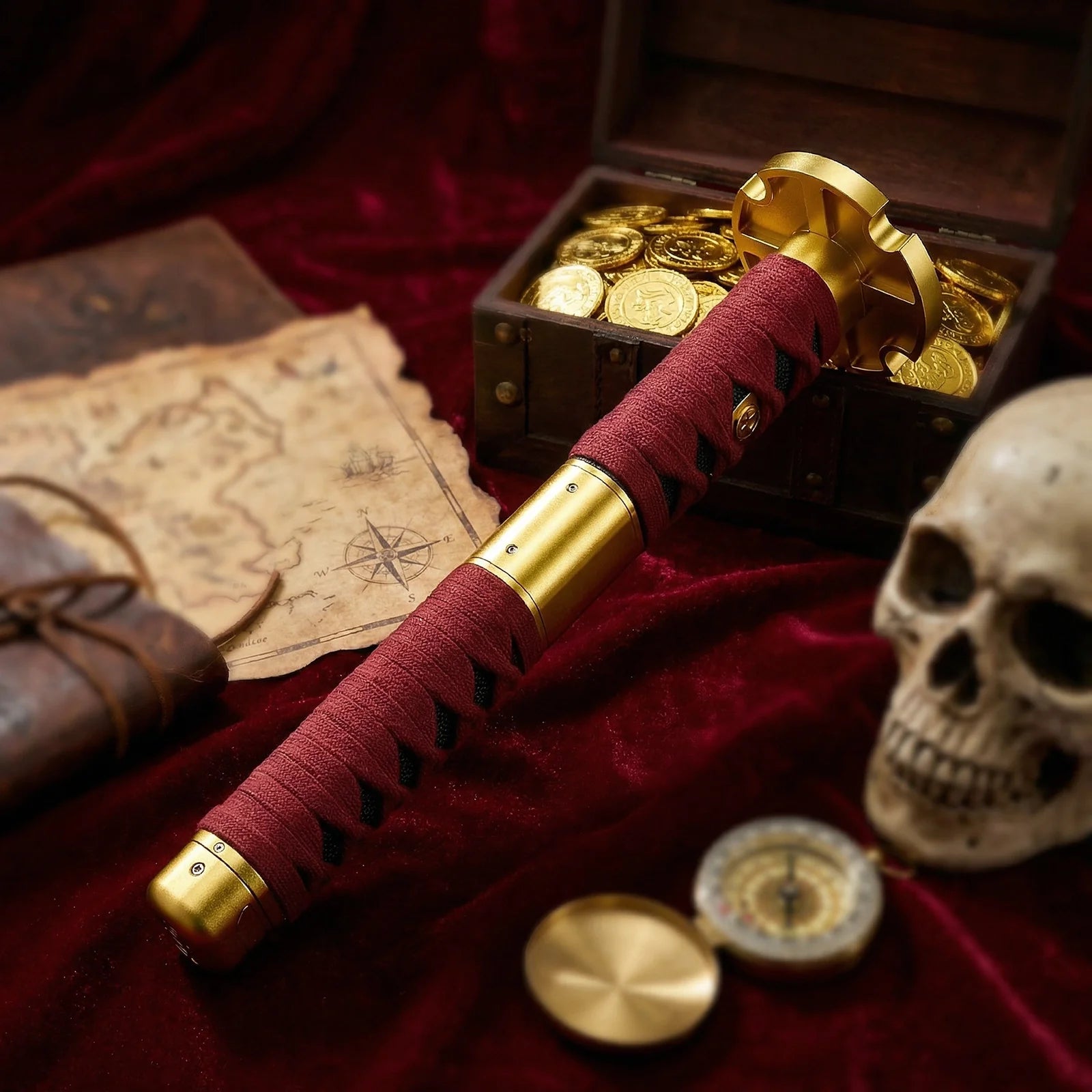
More than any other collectible you own, your lightsaber hilt is a truer reflection of who you are. The blade may be the star, but the hilt is the real show in your hand. It changes the way you grip, the way you stand, and the way you feel in every duel and pose.
Choosing the perfect lightsaber hilt takes much more than liking a particular design. This guide will show you how to pick a hilt that's uniquely you, not just whatever was randomly picked.
Step 1: Know Your Purpose First
-
This step is done before considering the hilt options. Ask yourself what your purpose for acquiring the hilt is.
-
Is your purpose to acquire a collectible that will be displayed in your home?
-
Is your purpose to have a prop for a costume?
-
Will this be a hilt that you use for real combat, or will this be a collectible that represents a character?
Having a purpose for the item is important because it helps narrow your options. A collectible for display will look good but will not be strong. A combat hilt will be strong and safe but may not be accurate to screen. Write down your purpose to avoid buying a hilt that will not fulfill your goal.
Step 2: Select a Blade Color That Accurately Represents You
Colors in the Star Wars universe and lore go far beyond just the hilt. The blade color, and the meaning behind it, should be an important factor in your hilt selection. Blue and green represent Jedi who rely on skill and discipline. Red lightsabers is for Sith and dark side users who rely on aggression and power. Purple is for a cross-paths fighter. Yellow, associated with Jedi sentinels and guardians, is for those who combine combat with other tasks.
Choose a color that describes the character you love or the story you want your collection to tell. If you want to bring a set to life, your color choices should be made in advance. A collection should be uniform and not a hodgepodge.
Step 3: Choose Fixed or Modular
As far as construction, there are only two styles of lightsaber hilts. Fixed hilts are constructed as a single piece. There are no moving parts that create gaps or openings in the design. This style is good for collectors who want a hilt that is inherently displayable.
Modular hilts are made up of several customizable pieces. Any combination of emitters, pommels, grips, and maybe the core can be swapped at any time. This style is good if you want a hilt that can be modified and updated.
If you want to make only one hilt that you will keep, go with fixed construction. If you want to change the same hilt, choose a modular construction.
Step 4: Check the Grip and Balance
Sometimes a hilt can appear stunning in a picture but feel off when it's in your hands. The grip is crucial if you are going to be active with your saber, like cosplaying or performing on stage. Assess the hilt and where the weight is distributed. A well-designed saber hilt will have the balance in the hilt portion by your hand, not by the emitter or the pommel. Bad balance will tire your arm and disrupt your form to pose or swing.
Consider the grip material. Metal will be cold and solid and will fit the screen designs. Rubber or textured grips can help with long sessions and movement/performance. Take note of the reviews that discuss grip and weight when you are shopping online. The pictures will not tell you the feel of the hilt.
Step 5: Look at Material and Build Quality
Saber hilts can be a variety of builds. Each has an impact on the price, weight, and how durable it will be. Metal hilts (aircraft-grade aluminum) will give the closest, heaviest, and most durable option to what you have on screen.
Polymer or resin hilts will be the lighter and cheaper option but will not hold up as well. Hybrid builds combine a metal frame with polymer parts to keep the weight and durability up.
Consider what you will be using the hilt for, display or dueling, when selecting a material. A display piece can run lighter. A hilt meant to be handled often will need a stronger material.
How to Spot a Well-Built Hilt
Quality shows up in small details. Check the seams where parts connect. A well-built hilt has tight, even seams with no gaps or rough edges. Loose seams mean cheap assembly and a hilt that rattles during use. Look at the emitter and pommel threads. Screw threads should turn smoothly, without grinding or catching. Rough threads wear out fast and strip after a few uses.
Weight tells you a lot too. Pick up the hilt. A quality metal hilt feels solid in your hand, never hollow or light for its size. A cheap build often feels lighter than it looks, since makers cut corners on internal parts to save cost.
Check the finish next. Run your fingers along the surface. Sharp edges or uneven paint point to rushed manufacturing. A clean anodized or powder-coated finish holds color and resists scratches far longer than a thin paint job.
Sound and light components matter for powered hilts. Test the switch before you buy. A solid switch clicks with a firm response. A weak switch feels mushy or sticks halfway. Ask sellers about their return policy and warranty. Sellers who stand behind their build quality offer clear warranty terms. Sellers who avoid the topic often sell hilts built to fail after the return window closes. A great hilt holds up under regular handling for years. Spend a few minutes checking these details before you buy, and you save yourself from a hilt that falls apart within months.
Step 6: Match the Hilt to a Character or Style You Love
Many collectors base their collection around certain characters or periods. If you have a favorite Jedi or Sith, check the hilt design before you buy. Note the shape of the grip, the style of the emitter, and such details as curved handles or hidden switches. A hilt that looks like your favorite character makes your collection more meaningful than just for the look.
Or, if you want a custom design, take ideas from different periods of time and combine them into a unique hilt. Old Sith curves, switches from the Clone Wars era, or Old Republic Specifications. You are making a hilt that fits your story, not copying someone else's.
Step 7: Plan Your Budget Before Shopping
Lightsaber hilts range from budget toys to museum-grade replicas that cost thousands of dollars. Set your budget before you begin looking. Once you start comparing premium metal builds with sound and lighting features, the prices jump up fast. Choose what matters to you. Sound, light-up features, screen-accurate detail. Prioritize so you know where to spend more and where to save.
A clear budget also prevents impulse buys. Collectors often wind up with hilts they don't use, bought in excitement, not with a plan.
COMMON MISTAKES TO BE AVOIDED WHEN SELECTING A HILT
Many buyers rush the first purchase, only to regret it later. Here are errors to watch out for. Buy on looks alone. A hilt that looks sharp in photos can sometimes feel wrong in your hand or fail under normal use. Make sure to review specs and reviews before you choose a design.
The budget step was bypassed. Many times, buyers without a budget will spend more than they wanted to on features they don't use. Like soundboards on a hilt that is just for display. Not caring about grip sizes. A large handgrip is awkward for a small hand, and vice versa. Check your hand and compare it to the hilt specs before you order.
Forgetting about maintenance needs. Metal hilts need care to avoid corrosion. Buyers who skip this step often find their hilt damaged within a year of regular use. Overspending on your first hilt. Your first purchase teaches you your preferences. Start with a mid-range hilt, learn what fits your style, then invest in a premium build once you know your direction. Avoid these mistakes, and your first hilt purchase turns into a smart addition to your collection instead of a lesson learned the hard way.
Step 8: Test Before You Commit
Where you can, test a hilt before you buy. Local conventions, shops, and meetups often let you hold different builds side by side.
If you shop online only, look for sellers who post detailed weight specs, grip diameter, and full-length measurements. Read return policies closely too. A hilt that looks great in a listing photo might feel wrong in your hand, and you want the option to send it back if it doesn't fit your needs.
Step 9: Think About Long-Term Care
A good hilt lasts years if you treat it right. If you use your saber often, clean grips regularly, as sweat and dust build up fast during active use. Modular hilts can be checked every few months for screws and internal parts, as regular handling will loosen small parts over time.
Collectors who take care of their hilts properly often keep the same pieces in their collection for decades. A few minutes of maintenance protects a purchase you have spent real time and money to build.
Step 10: Know the Difference Between Neopixel and Standard LED Blades
This step is really important even if you're all about the outside design, because your hilt choice connects directly to the blade tech inside of it. Standard LED blades have one light source in the base of the blade. They are cheaper and work great for display or casual cosplay. Neopixel blades have a strip of individually lit segments the entire length of the blade. This results in smoother color transitions, better blade effects, and a more screen-accurate glow.
If your hilt can take soundboards, check if it works with Neopixel tech before buying. Some budget hilts only support the standard LED, and changing it later will cost more than choosing the right setup from the start.
Step 11: Think About Weight Distribution for Combat Use
If you’re going to spar or choreograph, the weight distribution changes everything about how the hilt will feel. A saber heavy on the emitter swings slower and pulls on your wrist for long routines. The balance point of a saber closer to your hand will be faster and give you more control for rapid attacks and blocks.
Before you buy a combat-oriented hilt, ask the vendors for the exact weight and balance point. A few extra grams in the wrong place will change the feel of a hilt after ten minutes of use, even if it feels fine for the first thirty seconds.
Step 12: Build Your Collection with Intention
When you know what you want to achieve, your budget, and your style, stop shopping for no reason. Curate your collection with intention.
Some collectors build around one character in all phases of their life. Others build a complete spectrum of blade colors. Others go for screen-accurate duplicates, one piece at a time. Choose your path, and keep to it. Your collection becomes a collection of real meaning, not just a shelf of unrelated pieces.
Find Your Hilt with NeoSabers
This guide has the goal in every step. An imitation of everyone else's. Built around you. A hilt. Your grip, your color, your character, your budget. It all feeds into the final choice.
Neo Sabers produces hilts for every step of that journey, from your first display piece to a fully custom dueling saber. Browse the collection and select the hilt that best fits the story you want to tell.
